 Uzm. Dr. Hasan Keleş
- October 19, 2026
- 3 min read
- Safety and First Aid
- — reads
Shopping is an exciting part of expecting a baby. But it is not right to assume that every product on the market is necessary or useful. Some popular products bring no benefit and also increase the risk of accidents and suffocation. Below are the products that international health and consumer safety bodies advise against, and the reasons why.
1. Baby walkers
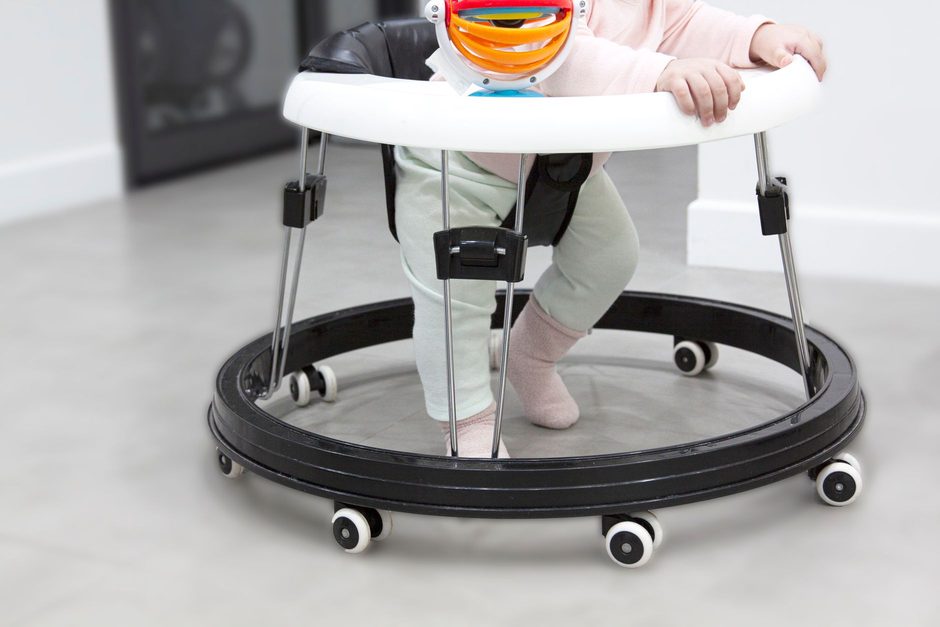
Contrary to popular belief, walkers do not help babies walk sooner; they may even affect motor development negatively. The main problem is safety: a baby in a walker can cover ground very quickly, fall down the stairs, or reach the cooker, a hot teapot or poisonous substances. According to a study published in Pediatrics in 2018, about 230,000 babies under 15 months were treated in US emergency departments for walker-related injuries between 1990 and 2014; around 90% of the injuries were to the head and neck.
The American Academy of Pediatrics (AAP) calls for a ban on the sale of baby walkers; they have been banned in Canada since 2004. Rolling, crawling and pulling up freely on a safe floor is the most natural way for a baby to develop (see month-by-month baby development). For falls, see our article on head injuries in children.
2. Neck floats
Inflatable rings worn around a baby's neck in the bath or pool restrict the baby's natural movements and put unnecessary strain on the neck. In 2022 the US Food and Drug Administration (FDA) warned parents not to use them: risks of drowning, suffocation and neck strain were reported, and the death of one baby was recorded. The risk is especially high in babies with developmental delay or muscle disorders. There is no evidence that they support development or build muscle strength as "water therapy".
3. Herbal teas in the first year
Herbal teas such as fennel, chamomile or linden may look harmless, but they may not suit a baby's sensitive metabolism. In the first 6 months a baby needs only breast milk or formula; water and tea are not needed (see water for babies). Tea fills the stomach and reduces milk intake. Harmful plants can also get mixed into herbal products: in 2003 the FDA issued a warning about star anise teas after cases, including infants, with symptoms such as seizures and vomiting. Tea made with sugar can cause tooth decay, and tea sweetened with honey can cause infant botulism in babies under 1 year. For approaches that do help with colic, see gas pain (colic) in babies.
4. Amber teething necklaces and bracelets
There is no evidence that amber or wooden bead teething necklaces ease teething. The FDA has warned that these products can cause death and serious injury through strangulation and choking on beads; the death of an 18-month-old who was strangled by his amber necklace during a nap was reported. For safe ways to soothe teething, see our article on teething in babies.
5. Crib bumpers, pillows and duvets
Padded crib bumpers look cute but carry a risk of suffocation by covering the baby's face. In the US, the Safe Sleep for Babies Act, which took effect in November 2022, banned the sale of padded crib bumpers. A baby should sleep on their back on a firm, flat, empty mattress with only a fitted sheet; pillows, duvets and soft toys do not belong in the cot (see baby room temperature).
6. Sleep positioners and inclined sleep products
Wedges and sleep positioners sold to hold a baby on their side or back are not recommended by the FDA because of the risk of suffocation. The same US law also banned the sale of infant sleep products with a surface inclined more than 10 degrees. Even for a baby with reflux, the sleep surface should be flat.
7. Bath seats
Bath seats are not safety devices: they can tip over, or the baby can slip out. The AAP recommends avoiding them. A baby should never be left alone in the bath, even for a moment (see baby bath).
What you really need
The list of essentials is short: a car seat that meets safety standards (see car seat use), a cot with a firm, flat mattress, clothes suited to the season, nappies and a digital thermometer. When choosing products, rely on scientific evidence and your paediatrician's advice rather than adverts, social media tips or popularity. Remember: the right product for your baby is not the best-selling one, but the one they actually need.
We can go over any products you are unsure about together during well-child visits. You can book an appointment at Özel Düztepe Yaşam Hospital in Şahinbey.
Frequently Asked Questions
No. A walker does not speed up walking and may even affect development negatively. The real danger is accidents: falling down stairs in a walker or reaching hot or poisonous things causes serious injuries. The American Academy of Pediatrics calls for a ban on the sale of walkers; they have been banned in Canada since 2004.
In 2022 the US Food and Drug Administration (FDA) advised against using neck floats, citing the risk of drowning and neck strain. There is no evidence that they support development or build muscle strength.
In the first 6 months a baby needs only breast milk or formula; water and tea are not needed. Herbal teas are not recommended in the first year: they fill the stomach and reduce milk intake, harmful plants have been found mixed into some products, and preparing them with sugar or honey adds further risks.
There is no evidence that they ease teething. The FDA has warned that teething necklaces and bracelets can cause death and serious injury through strangulation and choking on beads; they should not be used.
No. Padded crib bumpers carry a risk of suffocation by covering the baby's face, and their sale has been banned in the US since 2022. A baby should sleep on their back on a firm, flat, empty mattress with only a fitted sheet.
📅 Book an appointment for your child's health
Book an online appointment with Specialist Dr. Hasan Keleş in Gaziantep — instant confirmation.
Book an Appointment Online