 Uzm. Dr. Hasan Keleş
- October 8, 2026
- 3 min read
- Skin Health
- — reads
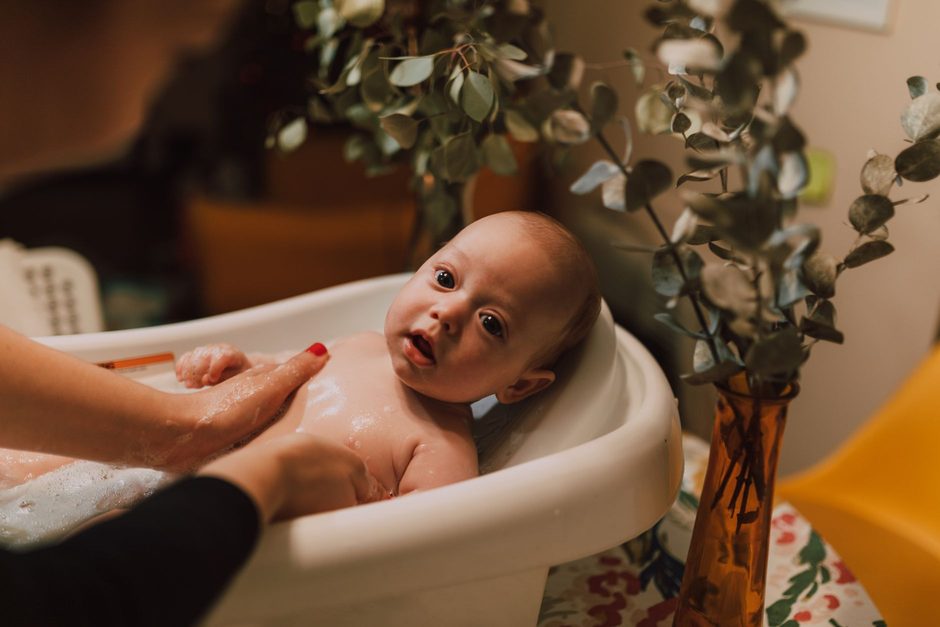
A newborn's first bath is an exciting moment for many families. But there is no need to hurry. In the first days a baby's skin has its own protective layer, and bathing should be done in a warm, safe setting without disturbing that protection. The first bath is a small beginning that deserves care.
Why not rush the first bath?
The white, creamy coating that covers a baby's skin at birth is called vernix. Vernix protects the skin and supports its moisture balance; it does not need to be rubbed off and is absorbed on its own. The World Health Organization (WHO) recommends delaying the first bath until at least 24 hours after birth, or waiting at least 6 hours if that is not possible. Newborns lose heat easily, and an early bath can leave them chilled.
The timing of the first bath is planned around the baby's general condition, body temperature and cord care. For premature or low-birth-weight babies, this decision is made together with the doctor.
Bathing before the cord falls off
The American Academy of Pediatrics (AAP) recommends sponge baths until the umbilical cord stump falls off (usually within 1-2 weeks), without putting the baby in a tub: using a soft cloth dipped in warm water, wipe the face first, then the neck folds and hands, and the nappy area last. If the cord gets wet, dry it thoroughly with a clean cloth. For details, see our article on umbilical cord care in newborns.
How often should a baby be bathed?
Babies do not need a bath every day. According to the AAP, three baths a week is enough for most babies during the first year. Bathing more often than needed, especially in the newborn period, can weaken the skin's natural protective barrier and lead to dryness and sensitivity. On the days in between, wiping the face, the neck and underarm folds, the hands and the nappy area is enough.
How often to bathe depends on the baby's age, skin type, the season and daily needs. A baby who sweats on hot summer days or gets very messy can be bathed more often; for a baby prone to atopic dermatitis (eczema), a short, lukewarm bath followed straight away by moisturising is important. What matters is not only frequency but also the right water temperature, a gentle cleanser and proper care after the bath.
Water temperature and preparation
- Keep the room warm and free of draughts; have the towel, nappy and clean clothes ready in advance.
- The water should be warm, not hot: about 37-38 °C, close to body temperature. If you do not have a thermometer, test it with the inside of your wrist or your elbow and mix it so there are no hot patches.
- The AAP recommends that hot water from the tap should not exceed 49 °C (120 °F). Turning down the setting on your water heater or combi boiler prevents scalds (see burns in children).
- Put only about 5 cm of water in the baby bath.
- Use soap sparingly: plain water is usually enough; if needed, use a gentle, fragrance-free cleanser suitable for babies only on dirty areas.
- Do not bathe the baby when they are hungry, very tired or have just been fed.
Bath safety
- Never leave the baby alone in the bath, even for a moment. If the doorbell or phone rings, wrap the baby in a towel and take them with you.
- Always keep one hand on the baby; a wet baby is slippery.
- Bath seats are not safety devices; they can tip over and lead to drowning. The AAP recommends avoiding them (see baby products not to buy).
- Do not clean inside the ears or nose with cotton buds; wipe only the outer parts.
After the bath
Wrap the baby in a towel straight away and pat the skin folds dry without rubbing. A fragrance-free moisturiser can be used on dry skin or if there is a tendency to eczema. If there is yellow, greasy scaling on the scalp, the care tips in our article on cradle cap (seborrheic dermatitis) can help.
Every baby's needs are different. If your baby's skin is dry, red or sensitive, we can plan a bathing routine together during newborn follow-up visits. You can book an appointment at Özel Düztepe Yaşam Hospital in Şahinbey.

📺 Related Video
When Should a Newborn Have the First Bath?
Instagram video by Specialist Dr. Hasan Keleş. Click to play.
Watch on Instagram →More videos on this topic

Does a Baby Need a Bath Every Day?
Frequently Asked Questions
There is no need to hurry. The World Health Organization recommends delaying the first bath until at least 24 hours after birth, or at least 6 hours if that is not possible. The white, creamy coating on the skin (vernix) should not be rubbed off; it protects the skin and supports its moisture balance.
The American Academy of Pediatrics recommends sponge baths instead of tub baths until the umbilical cord stump falls off. If the cord area gets wet, it should be dried thoroughly with a clean cloth and the stump kept dry and uncovered.
Daily baths are not necessary. Three baths a week is enough for most babies in the first year; on the days in between, wiping the face, neck folds, hands and nappy area is enough. Bathing too often can dry out the skin.
The water should be warm, not hot: about 37-38 °C, close to body temperature. If you do not have a thermometer, test the water with the inside of your wrist or your elbow and mix it well so there are no hot patches.
A healthy baby does not need cream after every bath. For babies with dry skin or a tendency to eczema, applying a fragrance-free moisturiser straight after the bath supports the skin barrier.
📅 Book an appointment for your child's health
Book an online appointment with Specialist Dr. Hasan Keleş in Gaziantep — instant confirmation.
Book an Appointment Online