 Uzm. Dr. Hasan Keleş
- September 17, 2026
- 2 min read
- Skin Health
- — reads
Head lice are small parasites that live on the scalp and feed on human blood. They are most common in school-age children aged 4-11. Every year, as schools open, they spread through classrooms in waves and create unnecessary shame in families. Yet head lice are not a matter of cleanliness; they live perfectly well in clean hair.
How do they spread?
Lice do not jump or fly; they only move from hair to hair. Most transmission therefore happens through:
- Close head-to-head contact during play
- Sharing a pillow or a bed
- Sharing personal items such as combs, brushes, hats, caps and hair clips
Pets do not carry or transmit head lice.
How are they recognised?
The best-known symptom is itching, but with a first infestation itching may start only weeks later. So it is important to look without waiting for symptoms:
- The nape of the neck and behind the ears are where lice are found most often
- Scratch marks, crusting and sometimes swollen neck glands
- White-brown specks on the hair shaft 0.5-1 cm from the root that do not fall off when shaken (nits)
A practical way to tell nits from dandruff: dandruff slides off easily with a finger, a nit is glued to the hair.
Wet combing: the basis of diagnosis and treatment
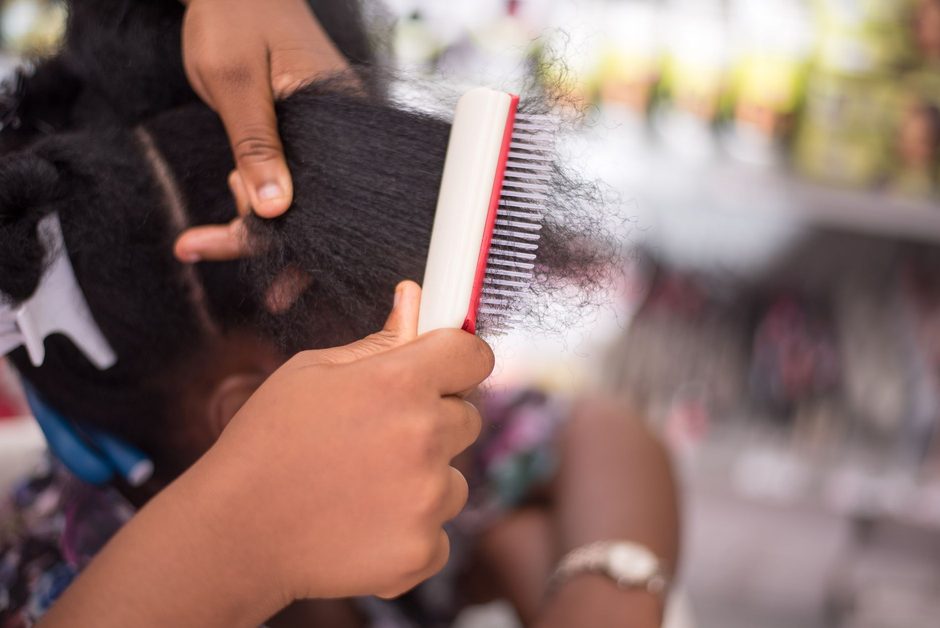
Wet combing is the most reliable method both for finding and for clearing lice:
- Wet the hair and apply plenty of conditioner. It slows the lice down and helps the comb glide.
- Use a fine-toothed metal nit comb; plastic combs are not enough.
- Divide the hair into sections and comb each from root to tip.
- Wipe the comb on a white tissue after each stroke and look at it.
- Repeat over the whole head; it may take 15-20 minutes.
Wet combing is continued every 2-3 days for two weeks during and after treatment.
Medicated treatment
Products from the pharmacy fall into two main groups:
- Physically acting products such as dimeticone: they coat and suffocate the louse. As they do not act chemically, resistance is not expected; they come first in recurrent cases.
- Insecticidal products such as permethrin: they kill lice, but have limited effect on eggs.
The same rule applies to both: the application must be repeated after 7-10 days, because new lice hatch from eggs that survived the first application. Product choice and duration vary with the child's age, so products should not be used without medical advice, especially under the age of two.
Never use: paraffin, petrol, insecticides or similar substances. They are ineffective against lice and dangerous for the child.
Measures at home and at school
- Everyone in the household should be checked; only those with live lice are treated.
- Bedding, towels and clothes used in the last three days are washed at 60 °C; what cannot be washed is kept in a closed bag for two weeks.
- Combs and brushes are cleaned in hot water.
- Hair clips, caps and hats are not shared; long hair is tied back at school.
- Inform the school or class teacher. Lice end when they are handled together, not when they are hidden.
Itching may have other causes; for persistent itching and rashes see our articles on atopic dermatitis and ringworm and fungal infections. If itching persists or sores and crusting develop on the scalp, you can book an appointment at Özel Düztepe Yaşam Hospital in Şahinbey.
Frequently Asked Questions
No. Head lice live in clean hair too, and spread mostly through head-to-head contact. Lice are not a sign of hygiene; they are one of the most common transmissible problems at school age. This false belief makes families hide the problem and prolongs outbreaks.
No. Head lice neither jump nor fly; they only move from hair to hair. Transmission therefore happens mostly between children who put their heads together, and less often through shared combs, hats and pillows.
A nit is the egg the louse glues to the hair shaft and does not come off easily; dandruff or hairspray residue slides off with a finger. White-brown specks 0.5-1 cm from the scalp that do not move when shaken speak for nits.
There is no objection to attending school once effective treatment has been applied. Long exclusion from school is not recommended; what matters is that everyone in the household is checked and that treatment is repeated after 7-10 days.
Paraffin and similar flammable substances are dangerous and must never be used. Olive oil or conditioner does not kill lice; it is only used as an aid in wet combing because it helps the comb glide.
📅 Book an appointment for your child's health
Book an online appointment with Specialist Dr. Hasan Keleş in Gaziantep — instant confirmation.
Book an Appointment Online