 Uzm. Dr. Hasan Keleş
- September 12, 2026
- 3 min read
- Safety and First Aid
- — reads
When a child falls ill, the family's first question is usually "where do we go?". This page is not an advertisement for any institution; it is written to point the way: which situations are emergencies, which belong in an outpatient clinic, and what to prepare before setting off.
First, the most critical distinction: is it an emergency?
If any of the following is present, go to an emergency department without waiting:
| Finding | Why it is urgent |
|---|---|
| Difficulty breathing, nasal flaring, drawing in between the ribs | Respiratory failure may develop |
| Blue discolouration of the lips or skin | Impaired oxygenation |
| Cannot be woken, excessive drowsiness, clouded consciousness | A sign of central nervous system involvement or severe infection |
| A seizure | The cause must be identified |
| Bleeding that cannot be stopped, serious trauma, a fall from height | Surgical assessment is needed |
| Suspected ingestion of a medicine or chemical | Time is critical |
| A temperature of 38°C or above in a baby under 3 months | Fever at this age must always be assessed |
| Unable to take anything by mouth, markedly reduced urine | Fluid loss may progress |
Most complaints outside these situations — a cough lasting a few days, earache, a rash, constipation, poor appetite, questions about growth and development — are better handled in an outpatient clinic.
Why do emergency and outpatient care work differently?
The job of an emergency department is to sort quickly: to find what threatens life or organ function and act without losing time. That is why the order is set by urgency, not by who arrived first. A family who has been waiting a long time may be surprised to see a child who came later taken in first; that is not unfairness, it is how the system works.
An outpatient clinic does a different job: taking a detailed history, assessing the growth curve, reviewing vaccination status and, where needed, setting up a follow-up plan. A child's recurring abdominal pain or a concern about development is not something that can be assessed in an emergency department.
What options are there in Gaziantep?
Children's health services in the city are provided in three main places:
- State hospitals and training and research hospitals — a paediatric emergency department is open 24/7, with advanced investigation and admission available. Waits can be long at busy times.
- Family health centres — the first step for vaccinations, well-child checks and simple acute complaints; if you are registered with your own family doctor, this is the fastest place to reach.
- Private hospitals and clinics — suitable for outpatient assessment by appointment, matters that need follow-up, and situations that need a longer consultation.
If the picture is an emergency, the nearest paediatric emergency department is the right choice; distance matters more than the preferred institution.
Prepare before you go
These do not shorten the consultation — they make it more accurate:
- The vaccination card or the e-Nabız vaccination record
- The boxes of any regular medicines (with dose information)
- Previous tests, imaging and reports
- What the temperature was, at what time it was measured, and what was given
- For babies, the number of feeds, urine and stools in the last 24 hours
- When the complaint began and how it has progressed
A short note on fever
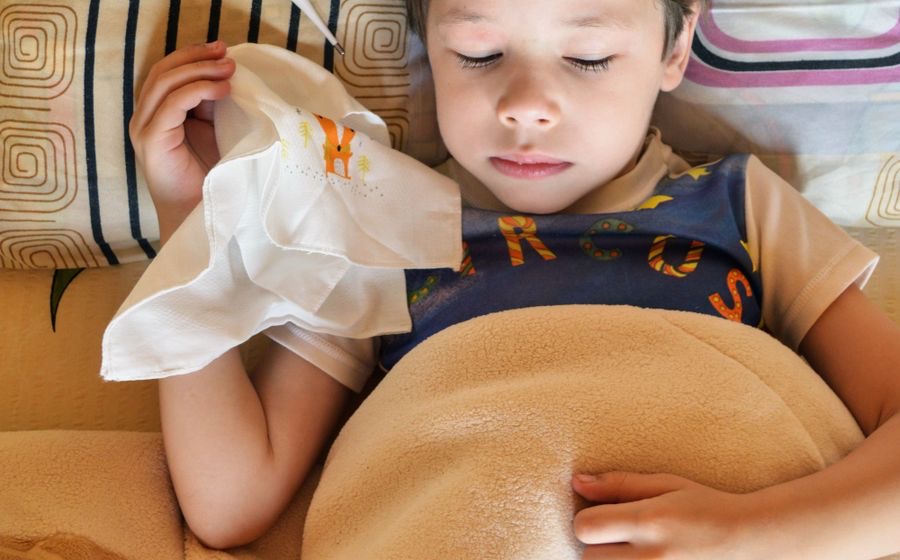
Fever is not an illness but a finding. What matters is less the reading itself than the child's general condition: if they play, drink and take an interest in their surroundings once the fever comes down, the picture is usually calmer. A child who stays listless despite an antipyretic, cannot take fluids, or whose breathing speeds up should be assessed. For detail, see the how to bring down a fever in babies article.
For planned check-ups
Vaccination follow-up, well-child checks, growth and development assessment and matters such as allergy all need continuity and are not emergency work; they need an outpatient assessment by appointment. For check-ups of this kind you can make an appointment at Özel Düztepe Yaşam Hospital in Şahinbey.
Frequently Asked Questions
Difficulty breathing, blue discolouration, drowsiness so deep the child cannot be woken, bleeding that cannot be stopped, a seizure, serious trauma, suspected poisoning, and a temperature above 38°C in a baby under 3 months all require an emergency visit. Outside these situations, most complaints are assessed in more detail in an outpatient clinic.
An emergency department exists to quickly identify what threatens life or organ function; the order of care is set by urgency, not by arrival. An outpatient clinic works by appointment, allows longer time, and joins up history, examination and follow-up. The same complaint is handled at different depths in the two settings.
It depends on the child's age and general condition. Fever is not expected in a baby under 3 months. In an older child with a fever, if the child can drink, takes an interest in their surroundings when awake and is breathing comfortably, going to an outpatient clinic in the morning is usually appropriate.
The vaccination card or e-Nabız record, the boxes of any regular medicines, any previous tests and reports, the times and values of temperature readings, and for babies the times of the last urine, stool and feed. This information speeds up diagnosis considerably.
Emergency departments are attended without an appointment. For an outpatient assessment, making an appointment both shortens the wait and increases the time available for the examination.
📅 Book an appointment for your child's health
Book an online appointment with Specialist Dr. Hasan Keleş in Gaziantep — instant confirmation.
Book an Appointment Online