 Uzm. Dr. Hasan Keleş
- August 6, 2026
- 6 min read
- Blood and Immunity
- — reads
While cuddling or bathing your child, you feel a pea-sized firmness on the side of the neck. The first question is always the same: "What is this, is it something serious?" The good news: swollen lymph nodes in children are among the most common and most benign findings seen in paediatric clinics. Most of the time it is a sign that the immune system has recognised a germ and is fighting it. Even so, not every swelling is the same; knowing when to wait and when to see a doctor prevents both unnecessary worry and delayed diagnosis.
What Is a Lymph Node and Why Does It Swell?
Lymph nodes (lymph glands) are small immune stations spread throughout the body. They are found in clusters in the neck, under the jaw, behind the ears, in the armpits and in the groin. Their job is to filter germs and foreign material carried in the lymph fluid and to multiply defence cells against them.
When a germ reaches an area, defence cells multiply rapidly in the lymph node that drains that area, and the node enlarges. In other words, the swelling is not the illness itself, but a sign that immunity is at work. That is why it is expected to see enlarged nodes in the neck after a throat infection, behind the ear after a scalp infection, and in the groin after a wound on the foot.
In young children, whose immune systems are meeting germs for the first time, lymph nodes enlarge more easily and more noticeably than in adults. It is quite normal for a child who has just started nursery to have enlarged nodes several times within a year. If your child has frequent infections, we explained in detail when this is normal and when it needs investigation in our article on frequently recurring infections and weakened immunity.
Which Nodes Are Considered "Normal"?
Lymph nodes can be felt in healthy children too. In general, the following features suggest a benign, reactive node:
- Size: Nodes up to 1 cm in the neck and armpit, and up to 1.5 cm in the groin, are considered normal.
- Consistency: Soft or rubbery; not rock hard.
- Mobility: Slides when pushed with a finger; not stuck to the skin or the underlying tissue.
- Pain: May be slightly tender during an infection; tenderness usually favours a benign cause.
- Course: Appears within a few days and slowly shrinks as the illness resolves.
In contrast, any node felt above the collarbone (supraclavicular region) must always be evaluated, whatever its size. This area is particularly important because it can give the first signal of conditions inside the chest and abdomen.
The Most Common Causes of Swollen Lymph Nodes in Children
Viral upper respiratory tract infections
This is the most common cause. In colds, pharyngitis, adenovirus and similar infections, several small nodes enlarge on both sides of the neck. They are usually symmetrical, painless or slightly tender, and regress within weeks after the illness passes.
Bacterial node infection (lymphadenitis)
This is usually a one-sided, rapidly growing node with red, warm skin over it and marked pain on touch. It is often caused by staphylococci or streptococci. Antibiotic treatment is required; if an abscess forms, drainage may be needed.
Infectious mononucleosis and similar systemic infections
With agents such as EBV, cytomegalovirus and toxoplasma, the nodes may be larger, more widespread and longer lasting. This picture is often accompanied by prolonged fever, extreme fatigue, sore throat and enlargement of the liver and spleen.
Infections of the teeth and mouth
A decayed tooth, gum infection or sores inside the mouth enlarge the nodes under the jaw. Sometimes the source of a swelling in the neck is nothing more than a single tooth.
Cat scratch disease and skin infections
If there is a cat at home, a scratch or bite can be followed by weeks of enlargement in the node draining that area. Conditions such as eczema, head lice and scalp fungus also enlarge the nodes at the back of the neck and behind the ears.
Temporary enlargement after vaccination
After some vaccines, the nodes in the relevant area may enlarge temporarily for a few weeks. This is an expected part of the immune response. For the vaccination schedule and expected reactions after vaccines, you can look at our vaccination services page.
Rarer causes
Tuberculosis and non-tuberculous mycobacteria, autoinflammatory conditions, rheumatological diseases and, rarely, malignant conditions such as lymphoma and leukaemia may present with enlarged lymph nodes. If recurrent fever attacks and abdominal pain accompany the picture, our article on familial Mediterranean fever and autoinflammatory diseases can be a helpful guide. When more than one value in the blood count is abnormal, the evaluation is broadened within the framework we describe in our guide to blood disorders in children.
Is Every Lump Felt in the Neck a Lymph Node?
No. Some structures that parents take for lymph nodes are actually something else:
- Congenital cysts: A thyroglossal cyst in the midline or a branchial cyst on the side of the neck are structures present from birth that enlarge and become noticeable during an infection.
- Salivary gland enlargement: In mumps, the area in front of and below the ear swells; this is not a lymph node.
- Muscle tightness: In babies, tightness in a neck muscle (torticollis) can feel like a swelling.
- Sebaceous cyst/lipoma: Soft masses under the skin that have stayed the same size for years.
It is the physical examination that makes the distinction; for this reason it is not right to wait on the assumption that "every firmness you can feel is a lymph node".
When Should You See a Doctor?
If any one of the following is present, have your child seen by a paediatrician:
- The node is larger than 2 cm or is growing rapidly
- It is not shrinking within 2-4 weeks, or has stayed the same size for longer than 6 weeks
- The node is rock hard, fixed to the skin or underlying tissue, and does not slide when pushed
- There is a node above the collarbone or in the lower back part of the neck
- The skin over it is red, warm and tense; the swelling is very painful or gives the impression that pus has collected inside
- It is accompanied by fever lasting more than 1 week, night sweats, unexplained weight loss, loss of appetite or extreme fatigue
- There is node enlargement in more than one region of the body at the same time (neck + armpit + groin)
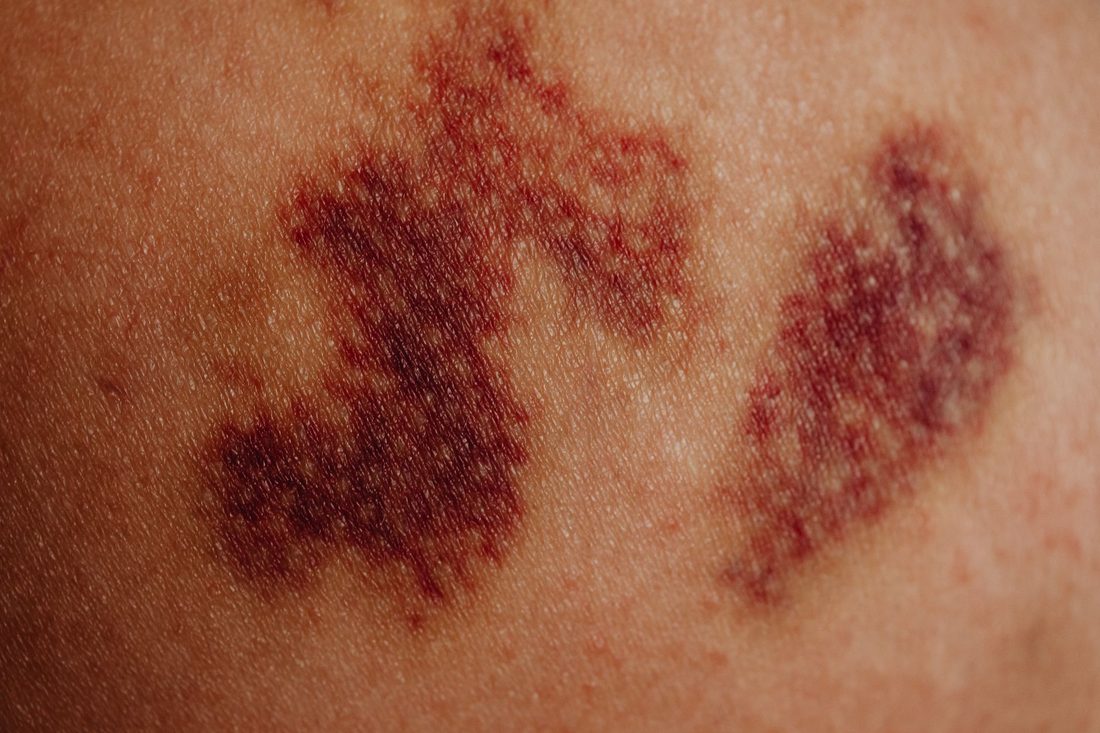
- There is widespread bruising, a tendency to bleed or a pale appearance on the skin (for these findings you can also look at our article on thrombocytopenia and bruising in children)
- Enlargement of the liver or spleen has been found
- The swelling makes breathing, swallowing or turning the neck difficult — this situation requires urgent evaluation
- There is marked node enlargement in a newborn or young baby
Most of these items do not on their own mean a serious illness; they are situations that need to be clarified by examination and, if necessary, tests.
How Does the Doctor Evaluate It?
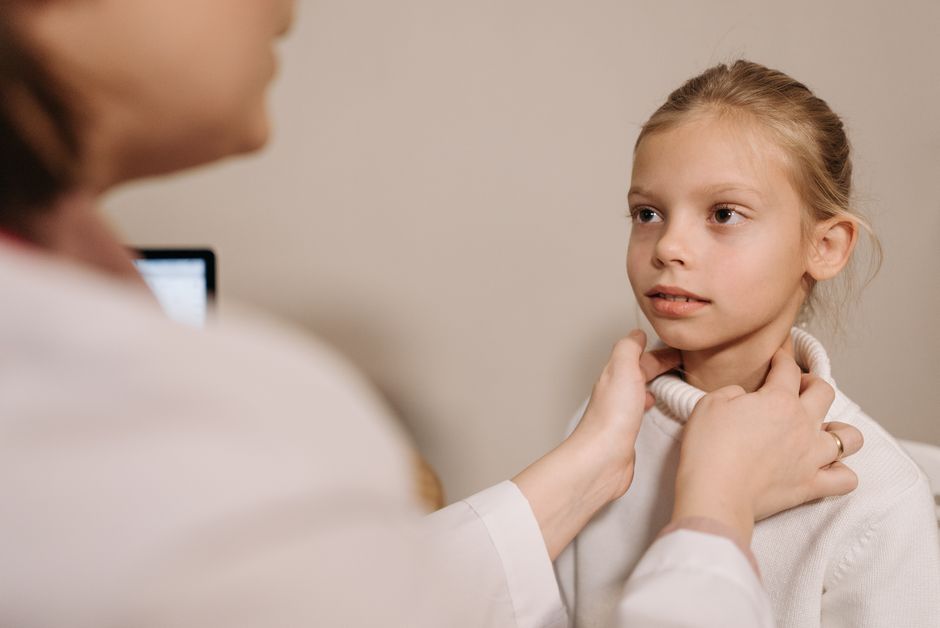
The evaluation starts with the history: when was the swelling noticed, is it growing, is there fever or weight loss, has there been a recent infection, animal contact, travel, medication use or vaccination. Then all lymph node regions, the throat, ears, gums, skin and abdomen (liver and spleen) are examined.
If necessary, the following tests may be requested:
- Complete blood count and peripheral smear — to distinguish infection from a blood disorder
- Sedimentation rate and CRP — the degree of inflammation
- Infection serology (EBV, CMV, toxoplasma, etc.)
- Neck ultrasound — shows the structure of the node, whether there is an abscess, and features favouring a benign or malignant cause
- Tuberculosis tests — if there is a risk
- Biopsy — only for nodes that persist for a long time, keep growing or have suspicious features
In most children no further testing is needed; seeing that the node has shrunk at a follow-up examination is enough.
What to Do and What Not to Do at Home
- Do not keep touching and measuring the node. It causes more irritation and makes it harder to notice that it is shrinking. Checking once a week is enough.
- Do not squeeze it or try to burst it, and do not apply mixtures such as vinegar or toothpaste on it.
- You may use a fever reducer at the dose your doctor recommends for fever and pain.
- Do not start antibiotics on your own; using leftover antibiotics at home masks the picture.
- Simple measures such as brushing teeth, nail care and skin hygiene reduce bacterial node infections.
- Record the size with a photograph and its date; showing the rate of growth at the doctor's visit is very useful.
Regular child check-ups make it possible to notice such findings early. For growth monitoring and the scope of the physical examination, you can look at our well-child follow-up service.
In Summary
Swollen lymph nodes in children are mostly a reflection of the immune system working normally. Nodes that are small, soft, mobile and appear together with an infection usually regress on their own. In contrast, nodes that keep growing, become hard or fixed, sit above the collarbone, or are accompanied by findings such as fever and weight loss must be evaluated without losing time. The decision is not made by guessing with the fingers, but by examination and, when needed, testing.
In Gaziantep, you can book an appointment for a detailed examination of the swelling on your child's neck and evaluation with the necessary tests; you can find clinic and directions information on our Gaziantep paediatrician page.
Frequently Asked Questions
Lymph nodes enlarged by an infection usually shrink noticeably within 2-4 weeks. However, it can take 2-3 months for a node to return completely to its original size; this delay alone is not a reason for concern. If the node is not shrinking but instead growing, a medical evaluation is essential.
The vast majority of small lumps felt in a child's neck are caused by infection and have nothing to do with cancer. Malignant conditions are rare; they usually appear as hard, painless nodes that are fixed to each other and to the skin, keep growing, and are accompanied by additional findings such as fever, night sweats and weight loss.
Yes. In most healthy children, soft and mobile nodes up to 1 centimetre can be felt in the neck, under the jaw and in the groin. This is a natural sign that the immune system is working, and it requires no treatment.
Not every swollen lymph node needs antibiotics. Antibiotics are of no benefit in viral infections. If the node has grown quickly, the skin over it is red and warm, and it is very painful, a bacterial infection is considered; in that case the doctor decides on antibiotics after an examination.
Pressing, squeezing or massaging the swelling is not recommended; it can increase pain and make an infected node worse. Follow your doctor's advice regarding warm compresses and pain relief, and avoid constantly touching the node to check its size.
📅 Book an appointment for your child's health
Book an online appointment with Specialist Dr. Hasan Keleş in Gaziantep — instant confirmation.
Book an Appointment Online