 Uzm. Dr. Hasan Keleş
- August 10, 2026
- 7 min read
- Vaccines
- — reads
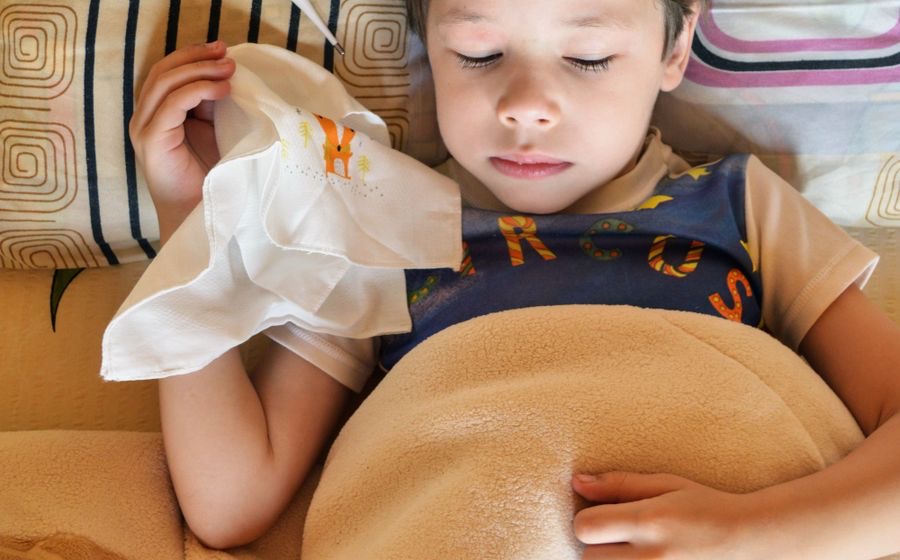
A few hours after leaving the vaccination room, your baby's forehead feels warm, they become fussy, and the injection site on their leg turns red. Most families have the same first thought: "Did something go wrong?" Fever after vaccination is not a bad sign but an expected response: the immune system has recognised the piece of the microbe introduced to it and has started a defence rehearsal. Even so, not every fever is harmless; some findings are not a natural consequence of the vaccine but a sign of a separate illness.
In this article I explain in detail which reaction is normal and which is a warning sign, when a reaction is expected after which vaccine, and what you should and should not do at home. We listed month by month which vaccine is given at which age in our 2026 Turkey vaccination schedule article; here our focus is the 72 hours after vaccination.
Why Does Fever Occur After Vaccination?
A vaccine does not give the body the disease itself, but an "identity card" that the immune system can recognise. When this card is recognised, defence cells release messenger molecules called cytokines. These molecules turn up the heat centre in the brain slightly. The result: mild fever, fatigue, loss of appetite and sleepiness.
In other words, fever is an indicator not that the vaccine is working, but that the immune system is working. An important detail: protection also develops in a child who has no fever. The worry "there was no fever, did the vaccine not take?" is unfounded.
Timing Is Everything: What Happens and When After Each Vaccine?
When the complaint begins after vaccination is the strongest clue in understanding whether it is due to the vaccine or to another cause.
Inactivated (killed) vaccines — 6-in-1 combined vaccine (DTaP-IPV-Hib-HepB), hepatitis B, pneumococcal, meningococcal, influenza vaccine:
- Complaints usually begin within the first 6-24 hours.
- They resolve within 1-2 days.
- Pain, redness and swelling at the injection site are the most common findings.
Live attenuated vaccines — MMR (measles-mumps-rubella), varicella:
- The reaction appears on days 5-12; sometimes it extends into the second week.
- A mild, pale pink rash may accompany the fever; this rash is not contagious.
- Mild swelling of the salivary glands may be seen after MMR.
Rotavirus vaccine (oral drops): mild diarrhoea or vomiting lasting 1-3 days may occur.
BCG (tuberculosis) vaccine: its reaction comes weeks later. Between weeks 2 and 6 a red bump appears, followed by a small sore and a scar; this is the expected course, not an infection. No ointment is applied to the sore, it is not covered, and it must not be squeezed.
High fever that begins 7 days after vaccination (except MMR/varicella) is generally unrelated to the vaccine; in this situation an intercurrent infection should be sought. We explained in detail when you should take the fever itself seriously in our article on when high fever in children is dangerous.
Side Effects Considered Normal
The following are common, resolve on their own and require no treatment:
- Fever around 38-38.5°C, for 1-2 days
- Redness, mild swelling and pain on touch at the injection site
- Irritability, crying, sleeping more than usual
- Loss of appetite, eating little for a few meals
- More frequent demand for the breast in a breastfed baby
- A small, painless firmness (nodule) at the injection site lasting a few weeks
- Mild rash and temporary salivary gland swelling after MMR
- Short-lived watery stools after rotavirus vaccine
- Dizziness or a feeling of fainting in adolescents right after the injection (due to fear of needles; this is why they wait seated for 15 minutes)
None of these situations is a barrier to giving the next dose of the vaccine.
What Is Not Normal? Reactions to Watch For
The findings below are rare and always require medical evaluation:
- Fever of 40°C or above, or fever lasting longer than 48 hours
- Continuous, inconsolable crying lasting more than 3 hours
- Hypotonic-hyporesponsive episode: the baby suddenly becoming limp, pale and unresponsive to stimuli (it usually lasts a short time but must always be reported)
- Having a seizure (convulsion) — we explained step by step what to do first in a febrile seizure in our febrile convulsion article
- The vaccination site becoming progressively larger, hot, with spreading redness and discharge
- Swelling of the entire arm or leg where the vaccine was given
- Signs of anaphylaxis: usually appear within the first few minutes; swelling of the face, eyelids and lips, widespread hives, wheezing, shortness of breath, hoarseness, bluish discolouration, sudden weakness. For this reason, waiting 15-30 minutes at the health facility after vaccination must never be skipped.
Anaphylaxis is extremely rare; however, when it occurs it is an absolute contraindication to further doses of that vaccine and must be recorded on the vaccination card.
What to Do at Home? A Practical Care Guide
For fever:
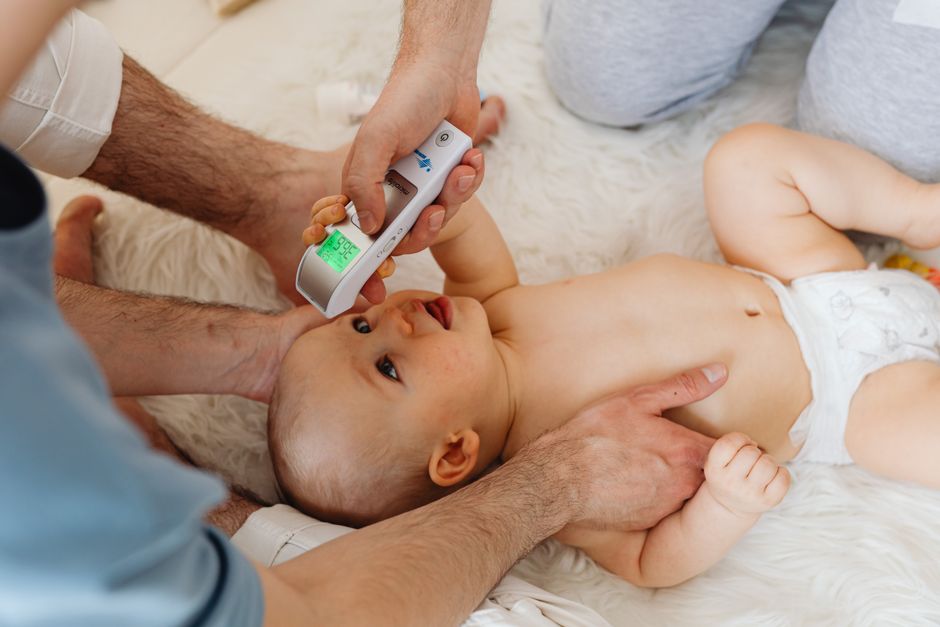
- Measure the temperature under the arm or with a suitable thermometer; do not rely on the impression that "the forehead feels hot".
- Keep the room cool and prefer a single layer of light clothing; do not swaddle tightly.
- Increase fluid intake; in babies under 6 months this means breastfeeding more often.
- Clarify medication decisions with your doctor. While paracetamol can be used at all ages, ibuprofen is not used in babies under 6 months. The dose is always calculated by weight, not by age.
- Aspirin is never given.
- Sponging with alcohol or vinegar water is absolutely wrong; it can be toxic and raises the fever by causing shivering. You can find the correct methods of lowering fever step by step in our guide on how to reduce fever in babies.
For the injection site:
- Keep it clean, dry and uncovered; do not dress the child in tight clothing.
- A short cool compress on the first day (without letting ice touch the skin directly) reduces tenderness.
- Do not rub it and do not apply folk remedies such as potato or onion; they create a risk of infection.
- Moving the leg or arm improves circulation and reduces pain.
What should not be done before vaccination: giving a fever reducer "just in case" when there is no fever. This practice is not recommended because it can reduce the antibody response to some vaccines.
When Should You See a Doctor?
Consult a doctor without delay in the following situations:
- Any fever of 38°C or above in a baby younger than 3 months (it must always be evaluated, even after vaccination)
- Fever of 40°C or above, or fever that does not come down despite a fever reducer
- Fever lasting longer than 48 hours, or fever that rises again after coming down
- The baby being difficult to wake, extreme lethargy, not making eye contact
- Convulsions, seizures, altered consciousness
- Bluish discolouration, rapid or laboured breathing, wheezing, chest retractions
- A red-purple pinpoint rash that does not fade with pressure
- Spreading redness, increased warmth or discharge at the injection site, or swelling of the entire arm or leg
- Persistent vomiting, inability to keep anything down, a marked decrease in urine output (a dry nappy for 6-8 hours)
- Crying that cannot be soothed for more than 3 hours
- Swelling of the face or lips, widespread hives, shortness of breath right after vaccination → go to the nearest emergency department
Whenever you are not sure, having your child examined is the safest course. In the post-vaccination period, assuming "it is because of the vaccine" can cause a genuine infection to be overlooked.
Common Misconceptions I Encounter
"If there was fever, the vaccine harmed my baby." Fever is a natural companion of the immune response; it is not a sign of lasting damage. It subsides within a few days.
"There was no fever, so the vaccine did not take." Protection develops independently of fever. An antibody response also forms in children who never develop a fever.
"Giving more than one vaccine on the same day tires the immune system." A child's immune system encounters a great many microorganisms every day. Vaccines given in the same session neither reduce protection nor noticeably increase side effects; they are simply given at two different sites.
"A child should not be bathed after vaccination." If there is no fever, a short warm shower is not harmful. The injection site is not rubbed or scrubbed; drying is done by patting.
"A child taking antibiotics cannot be vaccinated." Taking antibiotics for a simple infection is not in itself a barrier to vaccination. The decision is made at the examination according to the child's general condition.
"If there was a reaction, that vaccine is never given again." Expected reactions such as fever, redness and irritability are not a barrier to subsequent doses. The only true contraindication is a severe allergic reaction to that vaccine.
The Importance of Noting Reactions on the Vaccination Card
Record every noticeable reaction — how high the fever was, at what hour it began, how many days it lasted, the size of the swelling at the injection site — as a short note on your vaccination card or in your phone. This information allows your doctor to personalise the plan before the next dose (choice of injection site, observation period, supportive treatment to be recommended). If a serious reaction is involved, this record is also important for reporting to the adverse events following immunisation system.
Is Fear of Side Effects Reason Enough to Delay Vaccination?
No. The diseases vaccines prevent (measles, whooping cough, meningitis, diphtheria) cannot be compared in severity with the expected side effects of vaccines. Delaying the vaccination programme lengthens the period during which the child is unprotected. With delayed vaccines the schedule does not start over; it continues from where it left off with a catch-up schedule.
Vaccination follow-up is not a stand-alone procedure; it is part of a process carried out together with growth, nutrition and developmental milestones. You can find this whole approach under our well-child follow-up service, and details of administration and dose planning on our vaccination services page.
In Summary
- Mild fever, irritability and redness at the injection site after vaccination are expected findings.
- The critical window is the first 24 hours for inactivated vaccines and days 5-12 for live vaccines.
- Fever above 40°C, fever lasting more than 48 hours, seizures, spreading swelling and breathing difficulty are not normal.
- No preventive fever reducer is given before vaccination; if fever develops, a weight-based dose is given on the advice of a doctor.
- Every fever in a baby younger than 3 months requires a separate evaluation.
In Gaziantep you can book an appointment to plan your child's vaccination schedule and to have post-vaccination complaints evaluated; you can reach all of our child health services in the region from the Gaziantep pediatrician page.
This content is for informational purposes only; it does not replace a medical examination. Always consult your doctor about your child's condition.
Frequently Asked Questions
With inactivated (killed) vaccines, fever usually begins within the first 24 hours and resolves within 1-2 days. With live vaccines such as MMR (measles-mumps-rubella) and varicella, fever may appear on days 5-12 and can last 1-3 days. Fever that continues beyond these periods is most likely due to an intercurrent infection rather than the vaccine.
No. Giving paracetamol preventively when there is no fever is not recommended; studies have shown that this practice can reduce the antibody response to some vaccines. Medication is given after fever appears or after the child becomes clearly uncomfortable, on the advice of a doctor.
Yes. Redness, mild swelling and tenderness to the touch at the injection site are the most common side effects; they subside on their own within 1-3 days. A cool (not iced) compress brings relief. If the swelling grows rapidly, involves the entire limb, produces discharge, or increases after 3 days, a doctor should be consulted.
A mild cold, runny nose or a low-grade fever below 38°C is not a barrier to vaccination. In moderate to severe illnesses that affect the child's general condition, vaccination is postponed until recovery. Your doctor makes this decision after examining your child.
Not necessarily. The fever response varies by dose and by child; there may be no fever at all with the next dose of the same vaccine. Have the reaction to the previous dose noted on your vaccination card so your doctor can take it into account at the next visit.
📅 Book an appointment for your child's health
Book an online appointment with Specialist Dr. Hasan Keleş in Gaziantep — instant confirmation.
Book an Appointment Online