 Uzm. Dr. Hasan Keleş
- September 6, 2026
- 2 min read
- Growth and Development
- — reads
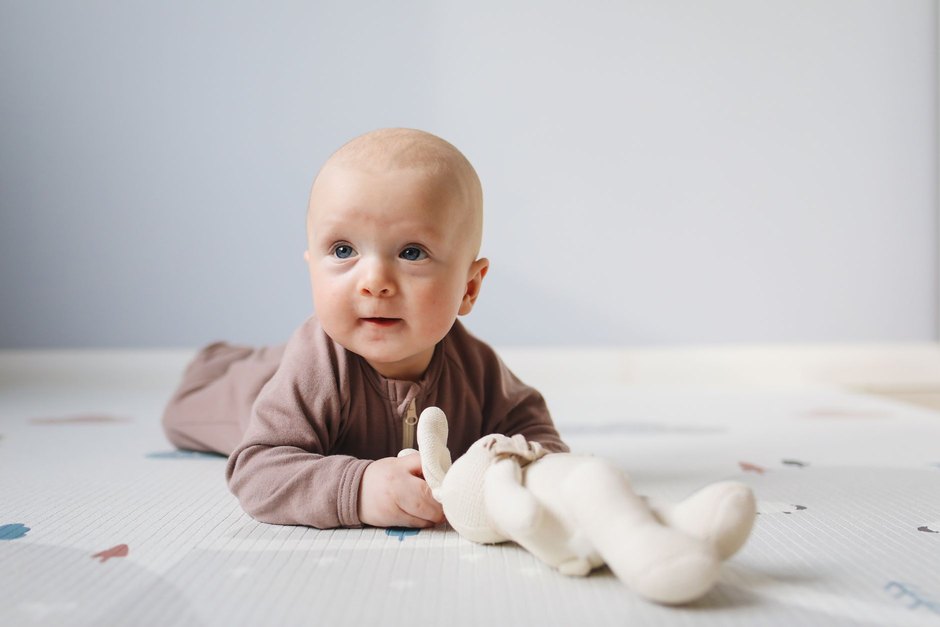
The second month is when a baby first truly communicates with the world around them. The reflex-driven behaviour of the newborn period slowly gives way to deliberate responses.
What to expect this month
Social and emotional
- Smiling while looking at your face (social smiling)
- Recognising your voice and turning towards sound
- Settling when picked up
Movement
- Briefly lifting the head while on the tummy
- Moving arms and legs more smoothly, with fewer sudden jerks
- Sometimes bringing the hands to the mouth
Vision and hearing
- Following a face at a distance of 20-30 cm
- Startling in response to a loud sound
- Beginning to track a moving object with the eyes
Feeding
At this age the only food is breast milk; nothing else is needed, not even water. Breastfeeding is usually every 2-3 hours, 8-12 times a day. In formula-fed babies the interval can be a little longer.
The two most reliable measures to follow are weight gain and six or more wet nappies a day. Vitamin D drops are continued daily in this period.
Sleep
Total sleep is around 14-17 hours but comes in blocks of 2-4 hours. Sleeping through the night is not expected. For safe sleep, the baby should be placed on their back on a firm, flat mattress, with no pillow or soft toy in the cot.
This month's vaccinations
| Vaccine | Note |
|---|---|
| 6-in-1 (DTaP-IPV-Hib-HepB) | 1st dose |
| Conjugate pneumococcal (PCV) | 1st dose |
| BCG (tuberculosis) | Single dose |
| Rotavirus | Optional, 1st dose — detail |
A mild fever and irritability lasting a day after vaccination is an expected response.
When to see a doctor
- If there is no response at all to a loud sound
- If the eyes never follow a moving object
- If there is still no social smiling after week 8
- If the head cannot be lifted at all while on the tummy
- If the baby refuses to feed, is constantly sleepy, or is extremely unsettled
- If the temperature is 38°C or above — fever at this age should always be assessed
Next step: 3-month-old baby development. A summary of the whole year is on the 0-12 month milestones page.

📺 Related Video
What Can a 2-Month-Old Baby Do?
Instagram video by Specialist Dr. Hasan Keleş. Click to play.
Watch on Instagram →Frequently Asked Questions
Day and night together it is usually 14-17 hours, but that time is broken into blocks of 2-4 hours. Sleeping through the night is not expected at this age, and waking to feed is normal.
In the national schedule the first doses of the 6-in-1 vaccine (which includes hepatitis B) and the conjugate pneumococcal vaccine, together with the BCG (tuberculosis) vaccine, are given at the end of this month. The first dose of the optional rotavirus vaccine is also discussed at this visit.
Usually in weeks 6-8. A baby looking at your face and smiling in response to your voice and expression is one of the most important developmental signs of this period.
Breastfed babies usually feed every 2-3 hours, 8-12 times a day. Weight gain and the number of wet nappies per day are better guides than how often the baby feeds.
📅 Book an appointment for your child's health
Book an online appointment with Specialist Dr. Hasan Keleş in Gaziantep — instant confirmation.
Book an Appointment Online